
Search engines have always tried to understand what people mean when they type a query, but just how much they’re able to grasp has changed dramatically. Google now places far more weight on how a page aligns with the purpose behind the search. Ranking factors like links and technical optimization still matter, but they can’t compensate for mismatches between what users want and what pages deliver.
AI-powered search tools have started to break queries into smaller tasks, examining content through a more nuanced lens. Tools like ChatGPT, Claude, and Perplexity might interpret a single question as several related needs and check each query against different sources. If your content provides an answer that closely fits those needs, it rises to the top. When it doesn’t, engagement drops and click-through-rates (CTRs) decline. Your position weakens.
This shift places intent at the center of modern SEO. Brands that understand what users are trying to accomplish and shape their content around those goals have a much clearer path to consistent visibility.
Understanding the Four Types of Search Intent
Every search starts with a goal, even if the user types something vague. Classifying that goal is the starting point for all intent-driven SEO efforts.
Most queries fall into four categories:
| Type of Search Intent | What Searchers Want* |
|---|---|
| Informational | To gain knowledge about a topic |
| Navigational | To find a specific website or page |
| Commercial | To research brands, products, or services |
| Transactional | To complete an action (e.g., make a purchase) |
| *As defined by Semrush |
Each type of query signals a different mindset and requires a different content approach.
In a 2024 ranking factors study, Semrush uncovered that text relevance is the top ranking factor in Google. Because of this, “It’s of paramount importance that you consider and address user intent with your content every single time.
Informational Intent: Users Seeking Knowledge
Informational queries appear when someone wants to learn or understand something. Think questions like ‘how,” “what,” “why,” or “when.” But they can also be short phrases like “keyword clustering” or “local SEO strategy.” Even “guide to” is an indication of an informational query.
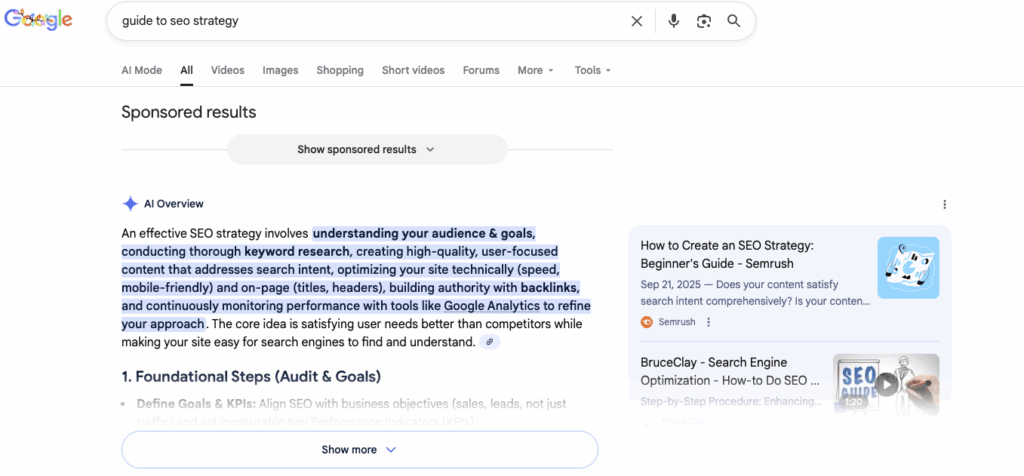
What defines these queries isn’t the wording, but the intent: clarity or explanation. Content that succeeds with informational intent answers the question directly, providing enough depth to satisfy curiosity without overwhelming the reader.
Navigational Intent: Users Looking for Specific Sites
Navigational queries happen when users want to reach a specific website or page. Someone searching for things like “HubSpot login,” “Shopify pricing,” or “Slack status page” already knows what they want to see.
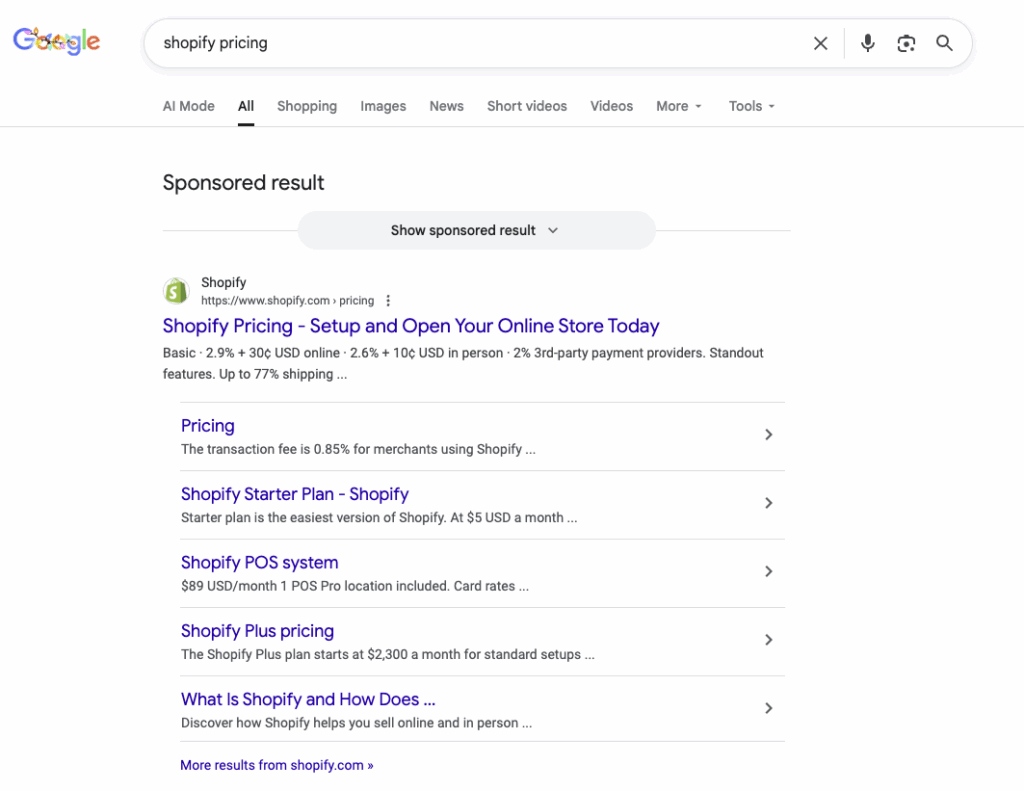
These searches usually blend brand terms with general phrases, reflecting users who don’t want alternatives. The best way to appear in those results is to ensure your brand offers well-structured site architecture, accurate metadata, and clear internal paths for branded queries.
Commercial Intent: Users Researching Before Buying
Commercial investigation queries usually mark the phase when users want different options and to compare solutions. Often these queries include phrases like “best payroll software for small business,” “HubSpot vs Salesforce,” or “local SEO services reviews,” and show clear buying interest, but not a final decision.

Pages that perform well here often provide objective comparisons and reasons to consider different options. Their guidance helps inform readers. As a result, these pages become the hinge between awareness and conversion.
Transactional Intent: Users Ready to Take Action
Transactional intent appears when users prepare to complete a task like buying products or signing up for services. It might also signal a willingness to download a resource. When searches contain words like “buy,” “download,” “pricing, or “get started,” the content that best serves them removes friction and clearly presents action. Landing and product pages, pricing sections, and signup forms usually win these rankings because they directly align with user objectives.

How AI and Conversational Search Have Changed the Game
Search behavior has changed in ways that feel subtle day-to-day, but enormous once you zoom out. People don’t type short, clipped keywords anymore. They’re asking real questions that are conversational.
Gone are the days of “content calendar example.” Thanks in large part to AI, they’re prompting, even in search engines, with questions like “What should a weekly calendar look like for a SaaS brand?” or “How do I plan social posts for a full month without burning out?”
That’s actually more helpful to search engines because it tells them what the person actually wants. Modern AI platforms take those long, conversational queries and break them down. They look for definitions, templates, related topics, and more. They often ask follow-up questions that the user might answer for clarification.
When your content speaks to those layers, you’re in a much better position. If it doesn’t, the system can tell. Pages that wander, pad the word count, or bury the answer rarely earn the visibility SEOs and brands chase.
The Rise of Zero-Click Searches and AI Overviews
Zero-click searches have largely driven this behavior. Thanks to featured snippets and AI overviews, users typically get the information they need on the results page. At first glance, you might think of this as a threat to organic traffic. But it can be a real opportunity to put your information front and center, as long as you structure your content for it.
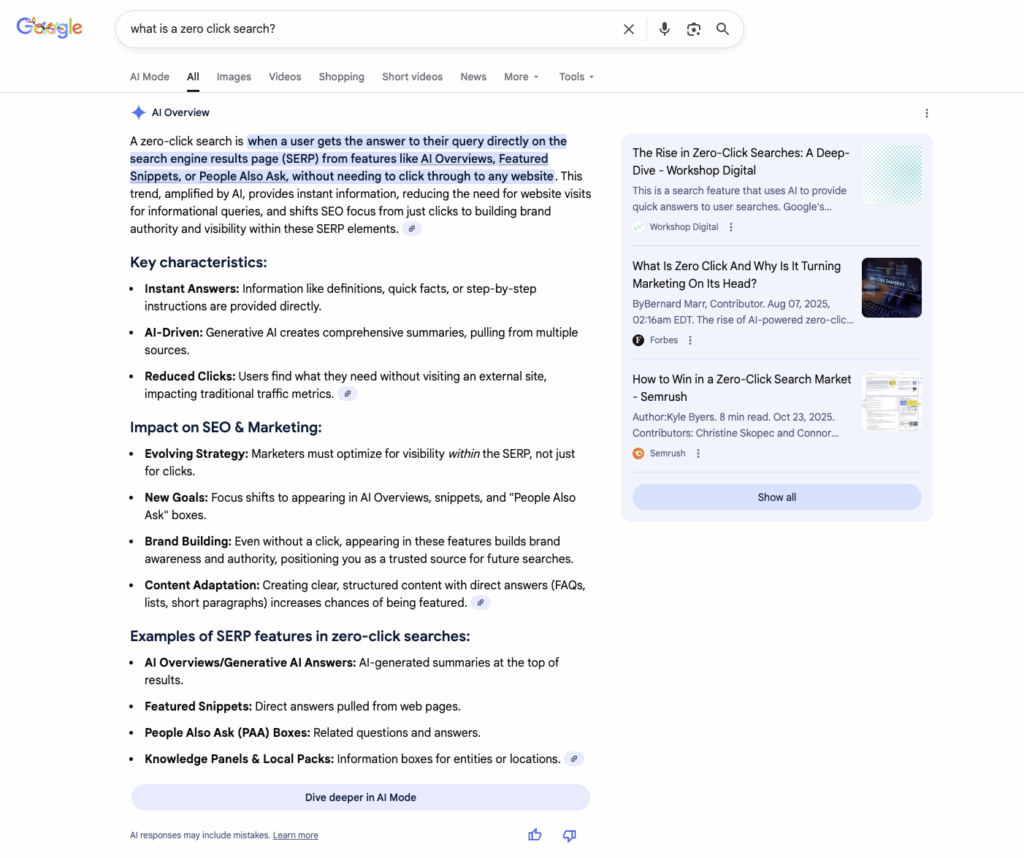
Search engines and AI tools still rely on content that’s easy to interpret. Clear section headings and short definitions win the day, as do step-by-step instructions or well-structured comparisons. When you structure content this way, it’s far more likely to be pulled into these high-visibility areas.
Even if the user won’t click through immediately, the impression still matters. Your brand becomes part of the information the search engine trusts enough to cite. That can influence future clicks, conversions, and your overall brand perception as users dive deeper.
Ranking alone is no longer the goal. Instead, you want to become the source that powers the answer.
Predicting User Search Intent: A Strategic Approach
Nailing down search intent is a repeatable process, not a guessing exercise. Before you create or update content, review the SERP for the keyword you want to target and analyze what Google believes users want.
This is often a four-step process:
First, look at the types of pages that rank. Guides, FAQs, and long-form content often indicate informational intent. Comparisons or listicles? They’re a sign of commercial intent. Product or service pages point to transactional intent.
Look at the SERP features. Featured snippets are common when users want quick answers. “People Also Ask” boxes can indicate a cluster of questions around the topic. Shopping ads or product carousels suggest transactional behavior, while local packs point to navigational or location-driven intent.
Examine the structure of top-ranking content. Some queries reward thorough guides, but others target concise summaries. The structure itself often tells you your audience’s preferences.
Finally, you can confirm your observations with tools like Semrush or similar platforms. These tools classify intent and track how it shifts over time, which can help you adjust your strategy before rankings move.
Search Intent & Keyword Matching: Building Your Content Strategy
Intent should shape every decision in your content and keyword strategy. Keywords aren’t interchangeable targets. Map them to the stages of the user journey they belong to.
Awareness keywords often lead to educational content, while consideration keywords focus on comparisons and evaluations. Decision-stage keywords point to landing pages and solutions-based content.
This approach keeps your content from drifting or becoming repetitive. Each piece has a clear purpose and audience, not to mention a clear role within your broader strategy. Because users get what they expect when they click through, engagement improves. This helps rankings stabilize.
How to Optimize Your Website to Match Search Intent
Start with what’s already there. Look for pages with high impressions and low clicks or strong rankings but weak engagement. These often reflect intent mismatches.
Auditing Existing Content for Intent Alignment
Not sure where to start with strategic content marketing? Look at performance metrics first. Pages with strong impressions but weak clicks often appear for the wrong intent. High bounce rates might signal that users expected something different.
If you find a page that doesn’t match the dominant intent for its keywords, refine it. Update its headings or reorganize sections; sometimes you may need to shift the angle to fit what users expect. Add depth to shallow pages, and trim content that doesn’t help.
Prioritize updates based on keyword value, traffic opportunities, and alignment with your goals. A few targeted updates, like clearer angles or more helpful examples, can make a big difference.
Group Content By Intent
One tactic we love is to group content into intent-based clusters. This can strengthen topical signals and improve internal linking. Informational pages can guide readers to commercial content. Comparison pages might eventually lead to landing pages. That structure helps users and search engines understand your site.
Don’t ignore consistency. It matters at the page level, too. Your headlines should reflect the user’s goal, and CTAs fit the right stage of intent. Format should match what people want.
How to Ensure Updated Content Matches Search Intent Over Time
Intent often shifts. Industries evolve, and new competitors enter the SERP. The types of content Google and other search platforms favor can change, too. Keep an eye on movements in ranking formats. If blog posts lose ground to product pages or vice versa, it can signal shifts in user expectations.
Make a habit of reviewing your highest-value pages regularly. Update outdated references, improve their structure, and add depth when needed. Small adjustments made consistently can prevent major ranking drops and ensure your content stays aligned with user expectations.
Integrating Intent-Based SEO with Your Broader Marketing Strategy
Intent-driven SEO supports the rest of your marketing efforts. Showing that you understand user expectations during the journey makes your content marketing, paid search, and conversion strategies more effective.
This approach really dovetails neatly with a personalized SEO strategy and improves your paid ad performance because all aspects of your messaging align. Intent creates cohesion, and when every piece of content connects to real user needs, the whole marketing system becomes easier to scale.
Conclusion: Intent-First SEO Is the Future
AI keeps reshaping how we think about search, but many of the best practices that relate to user intent still hold true, specifically that content works best when it matches what people actually want. Brands that build their SEO strategy around intent are the ones that are best poised to win because they earn trust, visibility, and long-term stability.
No SEO can (or should) promise perfect performance, but what we can tell you is that focusing on user intent is the foundation for sustainable growth.
FAQ's
User search intent is the goal behind a user’s query. When content aligns with that goal, it performs better across rankings, engagement, and conversions. These metrics translate to improved SEO performance and positive business results.
You can predict user search intent for target keywords by checking the SERP, reviewing the top-ranking content formats, observing the SERP features, and using tools that categorize keywords by intent.
Informational, navigational, commercial investigation, and transactional are the four types of search intent. Each reflects a different user mindset.
AI systems evaluate content based on usefulness and structure, not just keywords. Intent alignment heavily influences visibility in AI Overviews and snippets.
Audit your pages, look for mismatches, refine the angle and structure, and ensure the format fits user expectations.
Platforms like Semrush, combined with manual SERP analysis, help classify intent and track changes over time.