
Think about the last time you sought an answer to a question online and used Google to find it. How did you decide the answer solved the issue? More importantly, what factors went into choosing to trust it? As search engines have evolved and AI-powered responses have risen to the top, being able to trust published web content is more important than ever.
Google understands this, and for the past few years has been prioritizing content that meets specific guidelines: Expertise, Authoritativeness, and Trustworthiness (E-A-T). But in 2022, they added a new quality: experience.
These E-E-A-T guidelines have influenced where pages show up in search for a while now, and it’s essential that your content meets them if you want to have a chance of appearing near the top of the SERP.
E-E-A-T in SEO is a framework Google uses to evaluate content quality and trust. It’s not a single ranking factor. E-E-A-T signals help search engines and answer engines (LLMs) determine whether content is reliable, accurate, and helpful. Strong E-E-A-T improves visibility by increasing trust, authority, and the likelihood of being cited.
Fast Facts About E-E-A-T
- Trust drives all E-E-A-T evaluation. Content that lacks accuracy or transparency will struggle to earn visibility.
- Google evaluates E-E-A-T through signals across content, authors, and website reputation.
- First-hand experience increases credibility and improves the likelihood of being cited in search and AI results.
- E-E-A-T signals influence rankings indirectly by reinforcing content quality and reliability.
- Digital PR strengthens E-E-A-T by building authority through backlinks, mentions, and third-party validation.
- E-E-A-T applies at multiple levels, including individual pages, content creators, and entire domains.
- YMYL content requires stronger E-E-A-T signals due to higher risk and stricter quality expectations.
What E-E-A-T Means (and What It Doesn’t) in SEO
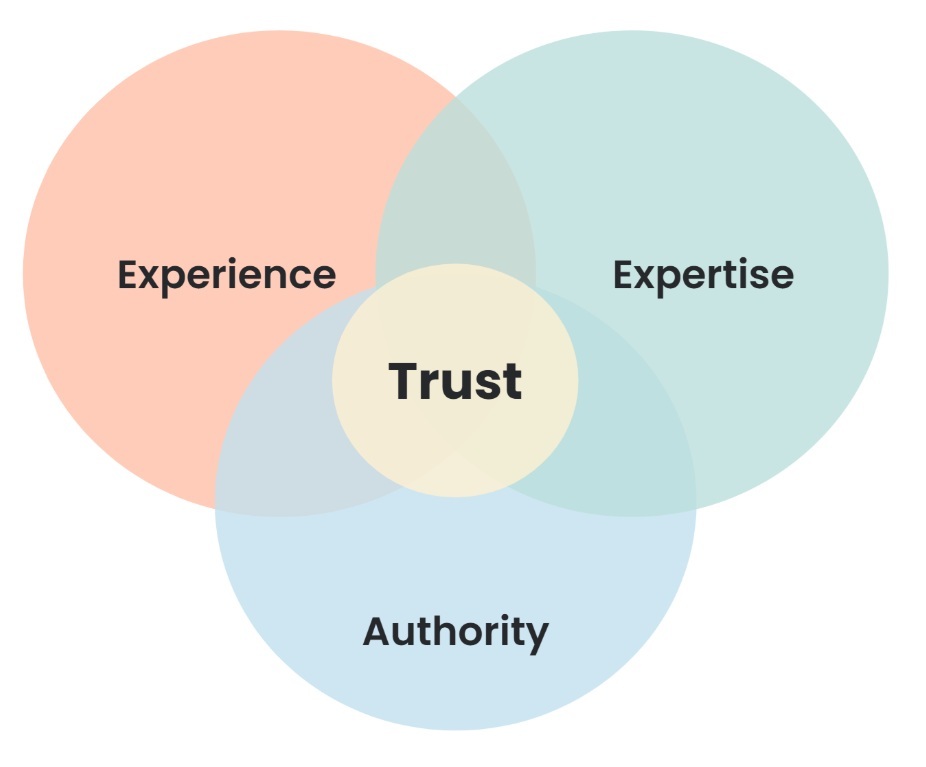
As we noted above, E-E-A-T stands for Experience, Expertise, Authoritativeness, and Trustworthiness. It helps Google evaluate whether content is credible and helpful for users. E-E-A-T isn’t a measurable ranking factor or score. Instead, it’s a framework for rater guidelines and systems to influence how the search engine interprets and ranks content.
E-E-A-T
- Experience: Content demonstrates first-hand involvement (e.g., original testing, screenshots, real examples)
- Expertise: Content reflects subject knowledge, especially for complex or YMYL topics
- Authoritativeness: The creator or website has recognition within the industry
- Trustworthiness: The content is accurate, transparent, and safe to rely on
Google places the most weight on trustworthiness. Inaccurate or misleading content often struggles regardless of expertise or authority.
E-E-A-T is the signal that illustrates how SEO and content marketing work together because high-quality content must demonstrate credibility to perform well.
The Most Important E-E-A-T Signals In Order
Trust signals are the most important E-E-A-T component, followed by experience and expertise, then authority. This hierarchy reflects how Google evaluates the safety, accuracy, and value of content for its search results.
1. Trust Signals (Highest Priority)
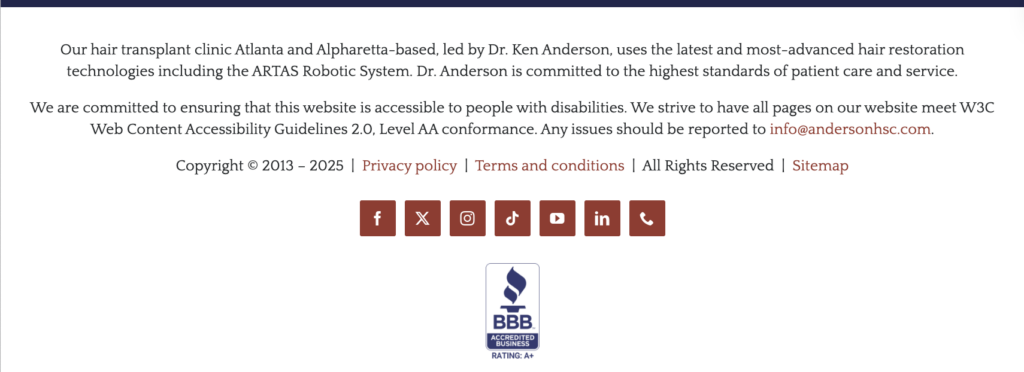
Trust signals determine whether content is reliable and safe for users. They include:
- Accurate, verifiable claims with citations
- Transparent authorship and ownership
- Clear policies (privacy, refunds, disclaimers)
- Secure website (HTTPS)
- Consistent, non-misleading messaging
2. Experience and Expertise Signals
Experience and expertise signals show that the creator understands the topic and has direct knowledge. Common experience and expertise signals are:
- First-hand examples, data, or testing
- Industry-specific knowledge and terminology
- Clear explanations tailored to audience level
- Evidence of real-world application
3. Authoritativeness Signals
Authority signals reflect external validation and reputation. Cultivate the following:
- High-quality backlinks from relevant sites
- Brand mentions in trusted publications
- Consistent topical coverage depth and consistency
- Recognition within a niche or industry
Content that excels at bolstering E-E-A-T (and authoritativeness in particular) is diverse and deep. It covers both main and tightly related topics, often in a variety of ways.
A website full of 3,000-word blog posts might provide details, but one that offers videos, images, interactive elements, and calculators provides added value. Moreover, by updating and publishing regularly (and using publish dates), you provide timely information to users and search engines. When these elements thoroughly explain topics and use proper formatting, they feel less like a blog and more like a book chapter.
In addition, look at who is authoring content. Multiple credible authors with expertise and experience provide more value than anonymous ones. If you have access to a credentialed expert, leverage it! Even a “reviewed by” citation can help. But points of view or quotes from experts? That’s even better.

Dependability is critical, too. There are multiple ways to show it.
A great user experience (UX) ensures pages are error-free and that content is written at the appropriate reading level. Off-site, you can leverage an active, timely, and responsive social media presence that engages with reviews and comments. By linking to well-known or credible sources, you show users (and search engines) that you’re clued into correct details.
Finally, brands often build domain authority through strategies like digital PR campaigns, which generate mentions and links that reinforce credibility. Additional opportunities, such as client testimonials and award showcases, are a low-effort, medium-impact way to earn E-E-A-T.
E-E-A-T Checklists
E-E-A-T improvements are most effective when you break them into actionable checklists across content, creators, and websites. Different teams – including content, SEO, and PR – can own different parts of E-E-A-T. This breakdown makes execution more manageable and scalable. Many of the best practices to earn backlinks dovetail nicely with establishing E-E-A-T across your domain.
Page-level Content Signals
Page-level E-E-A-T signals determine if a single piece of content appears trustworthy, accurate, and useful to users. Google often evaluates these signals directly on-page, which influences how both search engines and LLMs interpret the content quality. As you create content, you should:
- Include first-hand experience proof (photos, screenshots, original data)
- Support claims with credible citations or sources.
- Add clear publish or last updated dates. This provides context that your brand is attuned to changes in your industry or niche.
- Ensure the title accurately reflects the content.
- Avoid exaggerated or misleading claims.
- Define a clear audience and purpose.
- Include structured formatting for readability and crawler extraction. Key takeaways, often at the start of a piece, help drill down into what really matters.
Building content for clarity and extraction is critical, especially for AI systems. Knowing how to structure content for LLMs is an increasingly vital skill for writers, brands, and marketers alike.
Creator & Editorial Signals
Creator and editorial signals establish who’s responsible for content and whether the person or team is qualified to publish it. These signals reduce ambiguity and increase trust for both users and search systems. As you develop your strategy, focus on the following:
- Create author pages with bios and credentials.
- Disclose affiliations, partnerships, or conflicts of interest.
- Include reviewer information for regulated topics (medical, legal, financial).
- Publish an editorial policy page.
- Clearly explain how content is created and reviewed.
- Use AI transparently. Do not overstate expertise or authorship.
Strong editorial transparency aligns with broader content marketing strategies that focus on building long-term trust.
Website Trust & Reputation Signals
Website-level E-E-A-T signals determine whether the entire domain appears trustworthy and legitimate. Trust and reputation signals at the website level often influence how search engines perceive pages on a site. To do this well, you should:
- Maintain a detailed About page explaining the business
- Provide Contact information and customer support details
- Clearly state ownership and company background
- Include privacy policies, terms, and refund policies where applicable
- Use HTTPS and secure infrastructure
- Monitor and manage user-generated content (UGC) for accuracy
- Build third-party reputation signals through PR and mentions
Reputation signals are often strengthened through consistent digital PR efforts, which increase brand visibility and trust.
Page Experience and Technical Trust Signals That Support E-E-A-T
Page experience and technical SEO signals support E-E-A-T by improving usability and accessibility. Search engines (and users) perceive those pages as more reliable. While they’re not direct E-E-A-T components, they do influence how users and search engines interpret trust and quality:
- Fast load times and strong Core Web Vitals
- Mobile-friendly design and responsive layouts
- Clear navigation and logical structure
- Minimal intrusive interstitials or disruptive ads
- Clean, readable page layouts
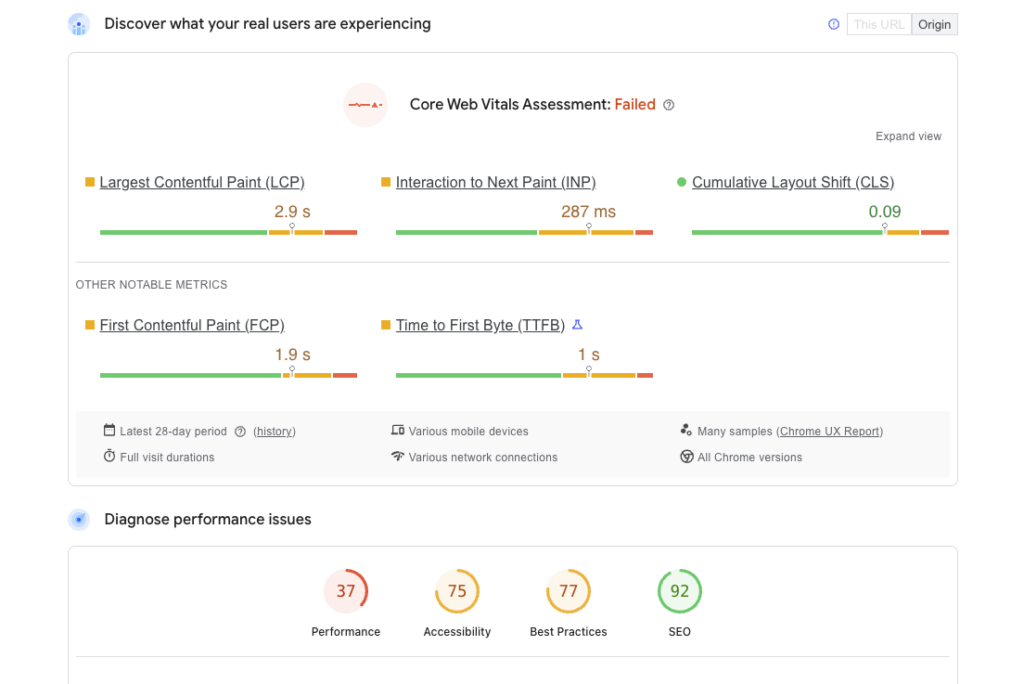
Technical performance supports trust because slow, broken, or cluttered pages reduce credibility. Most brands address these elements by partnering with an agency that provides technical SEO services.
YMYL Content: Higher Standards, Higher Risk
YMYL (Your Money or Your Life) content requires significantly stronger E-E-A-T signals because it can impact users’ health, finances, or safety. Google applies stricter quality expectations to YMYL content to prevent harm and misinformation.
YMYL topics include:
- Medical advice
- Financial guidance
- Legal information
- Safety-related content
For YMYL content, requirements increase. You must be sure to:
- Use expert-reviewed or credentialed authors.
- Provide high-quality, authoritative sources.
- Avoid speculative or exaggerated claims.
- Update content frequently to maintain accuracy.
- Include clear disclaimers and risk explanations.
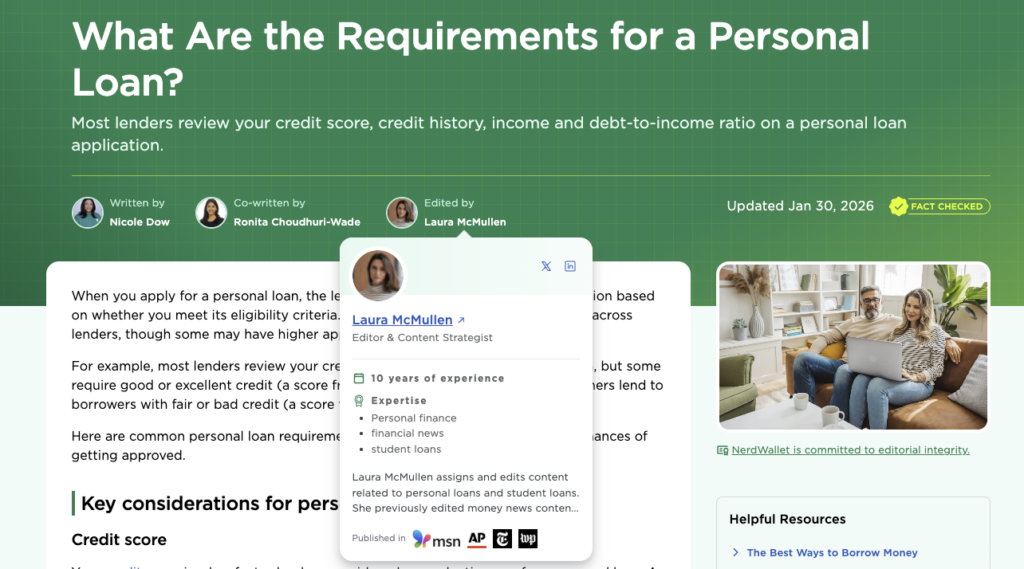
YMYL content without strong E-E-A-T signals is unlikely to perform well in search due to the potential consequences of misinformation.
How to Audit and Measure E-E-A-T Improvements
E-E-A-T audits help identify gaps in trust, credibility, and content quality across a website. A structured audit allows teams to prioritize improvements based on impact, risk, and opportunity.
Step-by-Step E-E-A-T Audit Workflow
- Select key templates: Create content that falls under multiple umbrellas, including blog posts, product pages, and service pages. Each one should have a structured layout and format.
- Score pages using a checklist: Evaluate trust, experience, expertise, and authority signals.
- Prioritize pages: Focus on high-traffic, high-value, or YMYL content
- Implement improvements: Add sources, update content, improve transparency
- Track performance over time: Pay attention to KPIs and do your best to tie them back to those pages.
Metrics and Proxies to Monitor
E-E-A-T doesn’t have a direct metric, but several signals indicate improvement:
- Increased engagement time and reduced bounce rates
- Growth in return visitors and branded searches
- Improved backlink quality and mentions
- More stable or improved SERP positions
- Better Search Console performance (clicks, impressions)
Combining E-E-A-T improvements with data insights and analytics allows teams to measure impact more effectively.
First Step to Earn E-E-A-T
Your first step in improving E-E-A-T is to audit existing content. Identify gaps in trust, clarity, or credibility. Most websites already have content that can be improved rather than replaced.
Start with these actions:
- Update older content with accurate, current information
- Add clear authorship and editorial transparency
- Strengthen internal linking and topical coverage
- Support claims with credible sources
- Improve content structure for readability and extraction
E-E-A-T improvements compound over time. Consistent updates, better sourcing, and stronger reputation signals gradually increase trust and visibility across search engines and AI systems.
Organizations that put effort into developing content to strengthen E-E-A-T can see valuable improvements in visibility, but getting there starts with knowing what and how to build that credibility. At JCT Growth, we pair our expertise and authority on what works for visibility with your knowledge and trustworthiness in your industry.
By pairing our skills, we can help build a content strategy that shares your unique value and business case with your audience. From putting the right words and images on the page to putting your message in front of a receptive audience with digital PR services, our team develops a cohesive digital marketing strategy to enhance your SEO and AI presence.