
Email marketing campaigns are a fundamental tool that work best when businesses match campaigns to clear goals, a receptive audience, and trigger behaviors. First-party data, segmentation, and conversion-focused metrics are crucial when open rates become less reliable.
Still, many businesses send emails without a defined strategy. They use newsletters, promotions, and automation, but fail to connect each campaign to a specific outcome. This limits performance and reduces revenue potential.
This guide explains several email marketing campaigns and when to use each one based on your business goals.
Table of Contents
Key Takeaways
- Email marketing campaigns include both broadcast emails (one-time sends) and automated campaigns triggered by user behavior.
- The most effective email marketing campaign strategy follows a clear goal-audience-trigger framework.
- Email remains a high-ROI channel because businesses own their audience and control distribution costs.
- First-party data and segmentation are critical for improving relevance and performance.
- Clicks, conversions, and revenue per recipient are more reliable than open rates due to privacy changes.
- Businesses should combine automation, testing, and templates to scale campaigns efficiently.
- A simple campaign stack (welcome, cart, post-purchase, newsletter) can support most growth strategies for small-to-mid-sized businesses (SMB).
What Counts as an Email Marketing Campaign
Email marketing campaigns are a coordinated set of emails. Companies send them to a defined audience to achieve a specific business goal. These goals can include customer outreach, lead generation, driving purchases, or increasing retention.
Email marketing campaigns fall into two primary categories:
- Broadcast campaigns: One-time emails sent to a segment or entire list at a scheduled time. Marketing teams use broadcast campaigns for newsletters, promotions, announcements, and time-sensitive updates.
- Automated or triggered campaigns: Emails a company sends based on user behavior, timing, or lifecycle stage. These campaigns include welcome series, abandoned cart emails, and post-purchase follow-ups.
Each campaign type aligns with a specific stage of the marketing funnel. Some prioritize introducing the brand and building familiarity at the top of the funnel. Others provide product-specific messaging to help prospects evaluate options. At the bottom of the funnel, emails can spur customers to complete purchases or buy more through loyalty initiatives.
| Marketing Funnel Stage | Campaign Type |
|---|---|
| Top of funnel (awareness) | Newsletters Educational content Lead nurture emails |
| Middle of funnel (consideration) | Product announcements Case studies Promotional campaigns or discounts |
| Bottom of funnel (conversion and retention) | Abandoned cart emails Post-purchase flows Loyalty campaigns |
Email marketing campaigns differ from one-off emails, which tend to be less strategic and have lower stakes. Campaigns, on the other hand, have a defined goal, audience segment, timing logic, and measurable outcomes.
For example, abandoned cart campaigns target users who’ve added products to a cart without completing checkout. The campaign’s goal is to recover lost revenue within a defined window.
Teams building a broader email marketing program use campaigns as modular components. They test, optimize, and scale them. A complete strategic email marketing strategy typically combines multiple campaign types to support acquisition, conversion, and retention across the customer journey.
Why Email Marketing Still Delivers ROI in 2026
Email gives businesses direct access to owned audiences, low distribution costs, and clear performance tracking across the customer lifecycle. Email marketing returns $36 to $42 for every dollar spent, making it one of the highest-performing digital channels.
Many businesses continue to prioritize it as a core channel. Nearly half of marketers report it as their most impactful marketing channel.
Email ROI Compared to Other Marketing Channels
| Channel | Typical ROI |
|---|---|
| Email marketing | 3,600-4,200% |
| SEO (B2B SaaS) | ~748% |
| Content marketing | 317-1,389% |
| Paid social | ~250% |
| Paid search (PPC) | ~36% |
Email outperforms many paid channels because businesses don’t pay for each impression or click. Once a business ethically builds an email list, the cost to send additional campaigns is low. This makes it cost-effective for SMBs that need predictable growth without increasing ad spend. Plus, email campaigns can support different goals at once, while paid channels are comparatively narrow.
Recent updates from Google and Apple Mail have limited the reliability of open rates. This makes clicks, conversions, and revenue per recipient stronger performance indicators.
That said, the first-party data that businesses collect and segment can lead to more relevant messaging across all digital marketing services. This improves engagement and long-term revenue.
The 3-Part Campaign Strategy Framework:
Goal → Audience → Trigger
Effective email campaigns start with a clear framework:
- Define the goal.
- Identify the audience.
- Select the trigger behavior.
The key to email marketing is sending with purpose. This structure helps marketing teams match each campaign type to a specific outcome and has a defined role in the customer journey.
Email marketing campaigns fail when teams prioritize format over strategy. Abandoned cart flows, welcome series, or regular newsletters only work when the goal, audience, and timing align.
1. Goal
Campaign goals define what they’re trying to achieve. Each goal requires a different campaign structure, message, and call to action (CTA).
Common email marketing campaign goals include:
- Lead generation: Capture new subscribers through forms or gated content
- Conversion: Drive purchases from active prospects or shoppers
- Retention: Increase repeat purchases from existing customers
- Reactivation: Re-engage inactive subscribers who have not opened or clicked emails
- Relationship building: Stay top-of-mind through consistent, value-driven content
Picture an eCommerce brand that wants to improve conversion. They may prioritize abandoned cart emails and promotional campaigns. A B2B company focused on lead generation might rely on nurture sequences and newsletters.
2. Audience
Audience defines who receives the email marketing campaign based on behavior, demographics, or lifecycle stage. Most companies segment their audiences by these factors. Segmentation improves performance by ensuring each message is relevant to the recipient.
Common audience segments include:
- New subscribers: Users who recently joined the email list
- Active prospects: Users who browse products or content but have not converted
- Customers: Users who have completed at least one purchase
- Repeat buyers: Customers with multiple purchases
- Inactive users: Subscribers who have not engaged within a defined time period
3. Trigger
The trigger defines when the email marketing campaign sends. Send time can either be manually scheduled or automatically deployed based on the user action. The trigger determines the timing and relevance of the message.
Two main types of triggers occur:
- Time-based triggers: Companies send emails on a schedule, such as weekly newsletters or seasonal promotions
- Behavior-based triggers: Companies send emails based on user actions, such as signing up, abandoning a cart, or completing a purchase
For example, an abandoned cart email triggers when a user leaves items without completing checkout. A post-purchase email triggers after a confirmed transaction.
Choosing the right trigger ensures the email arrives at the moment when the user is most likely to take action.
Best Types of Email Marketing Campaigns
Email campaigns fall into a bucket of core types that align with specific goals, behaviors, and funnel stages. Each type of email marketing campaign uses different timing, content, and triggers to move users from awareness to purchase and retention.
Marketing teams choose campaign types based on desired outcomes, not just the format. Below, we’ve laid out some of the most common email marketing types and when to use each one.
Newsletter/Broadcast
Newsletter or broadcast email marketing campaigns are one-time emails that companies send to a broad audience on a set schedule. They share updates, content, or promotions. Businesses often use newsletters to stay top-of-mind and maintain consistent subscriber engagement.
Newsletter campaigns can take two main forms:
- Designed newsletters: Branded layouts with images, multiple sections, and clear visual hierarchy.
- Text-based emails: Simple, plain-text messages that feel more personal and direct.
A SaaS company may send a weekly newsletter with product updates and blog content. An eCommerce brand may send promotional broadcasts that highlight new arrivals.
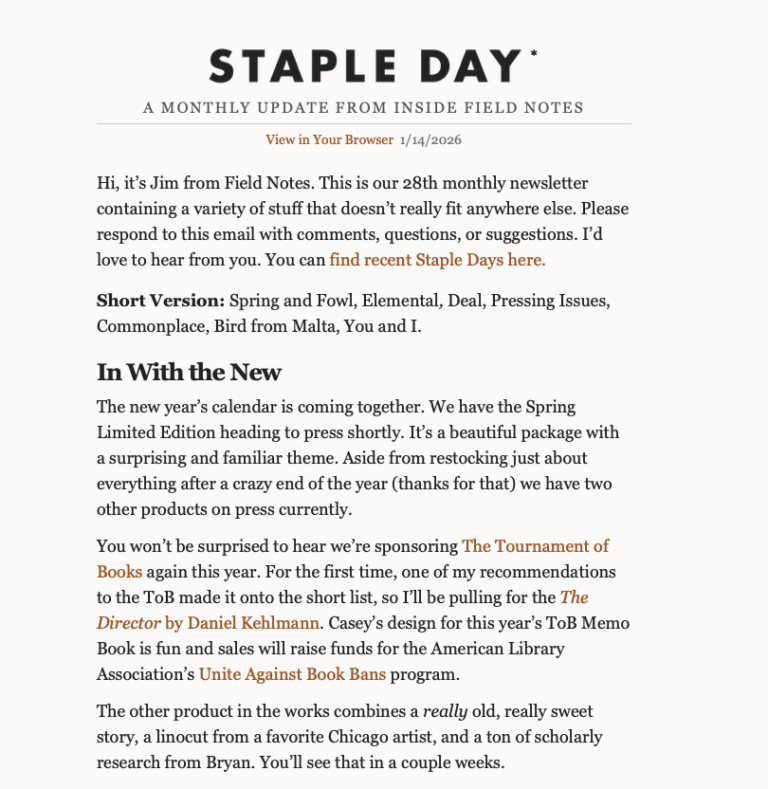
Doug, our senior writer, loves the Staple Day newsletter from Field Notes that comes out each month. It typically details product updates, interesting messages the team has received, and company news.
Seasonal or Promotional Email
Seasonal or promotional email campaigns are time-sensitive emails that drive immediate conversions during sales events, holidays, or limited-time offers. These campaigns prioritize urgency and clear offers, often with strong CTAs.
Common use cases for these emails include:
- Holiday sales (Black Friday, Cyber Monday)
- Flash sales or limited-time discounts
- Product launches tied to seasonal demand
Anniversary emails are another type of promotional email campaign. These blend limited-time offers with personalization to inspire conversion.
Welcome/Onboarding Series
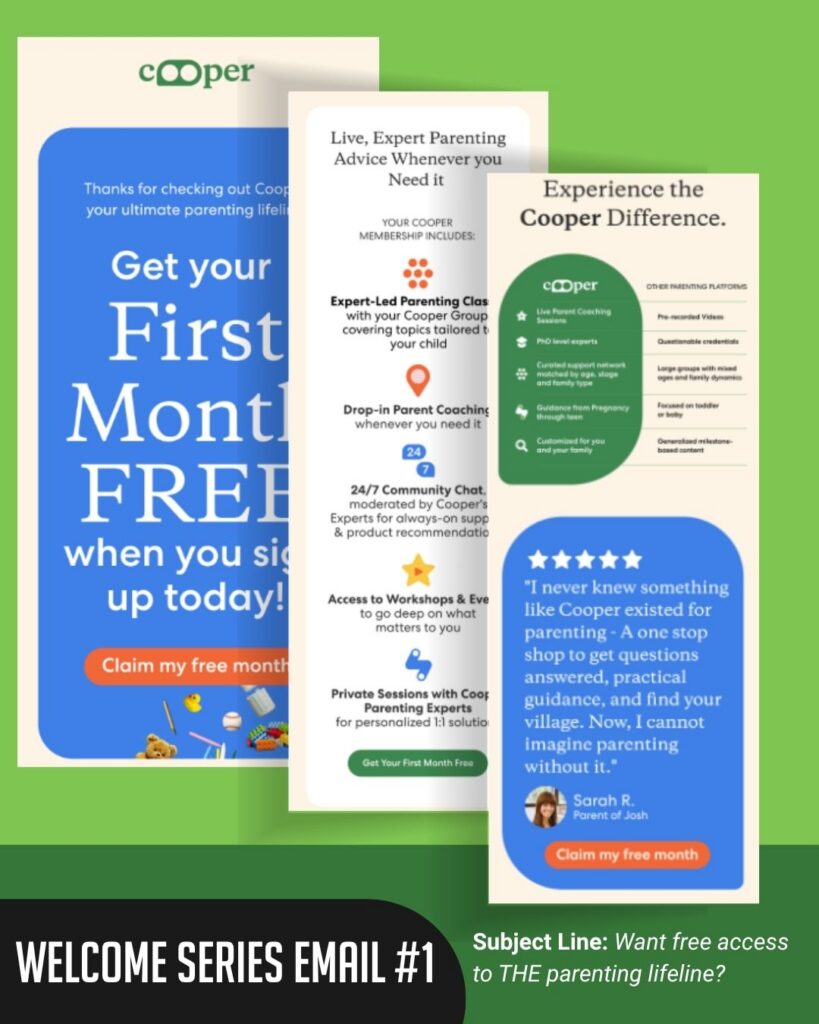
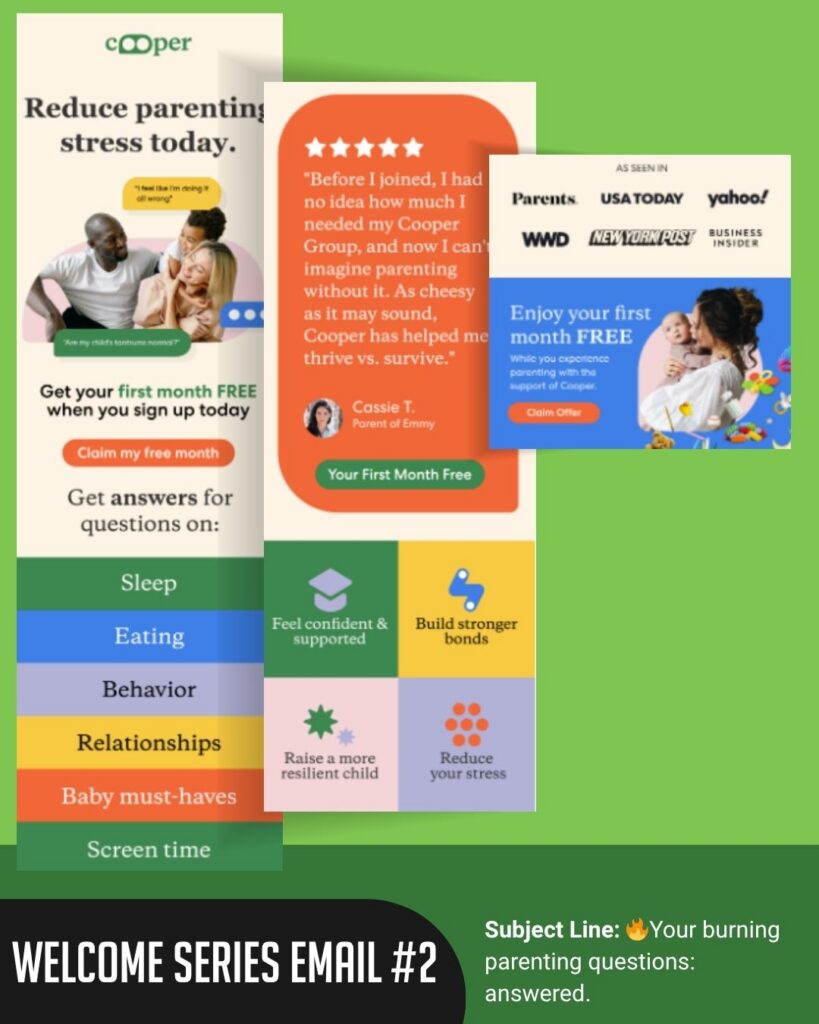
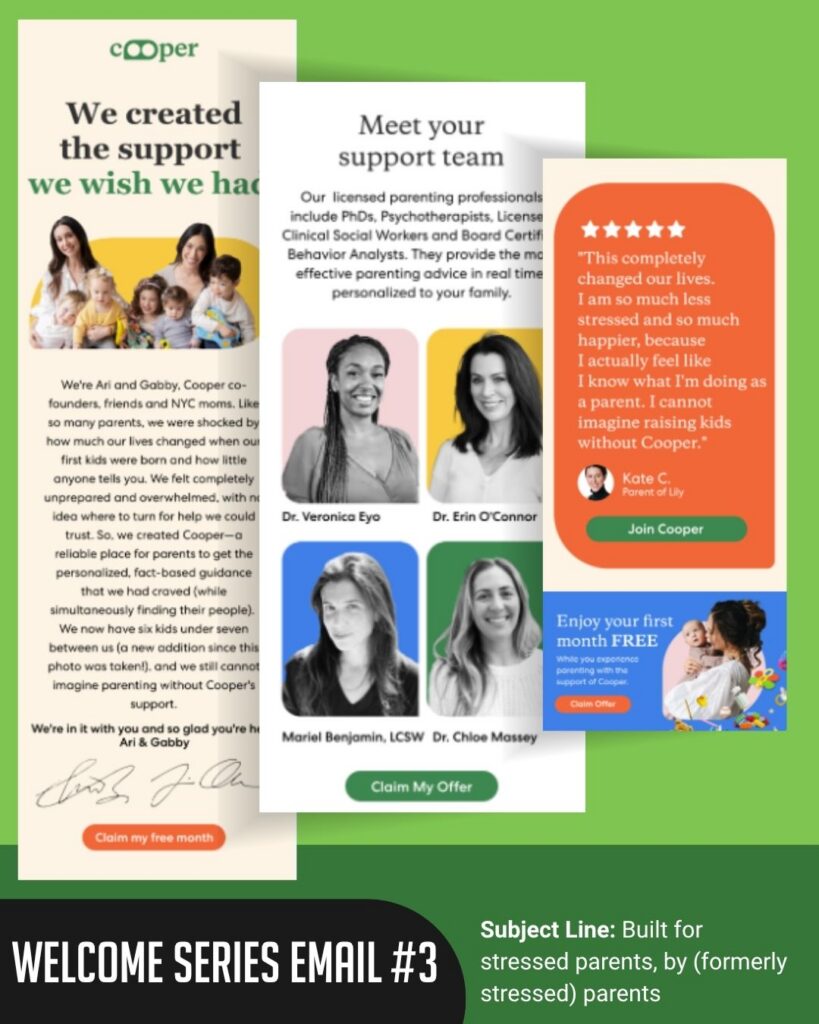
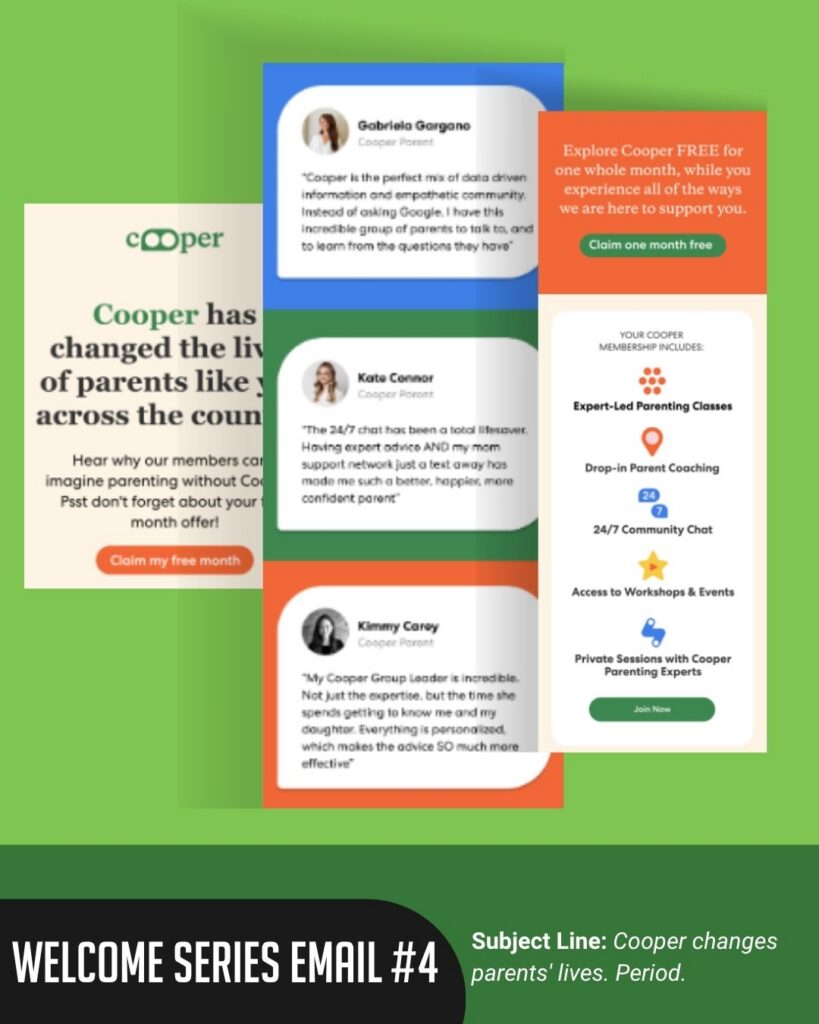
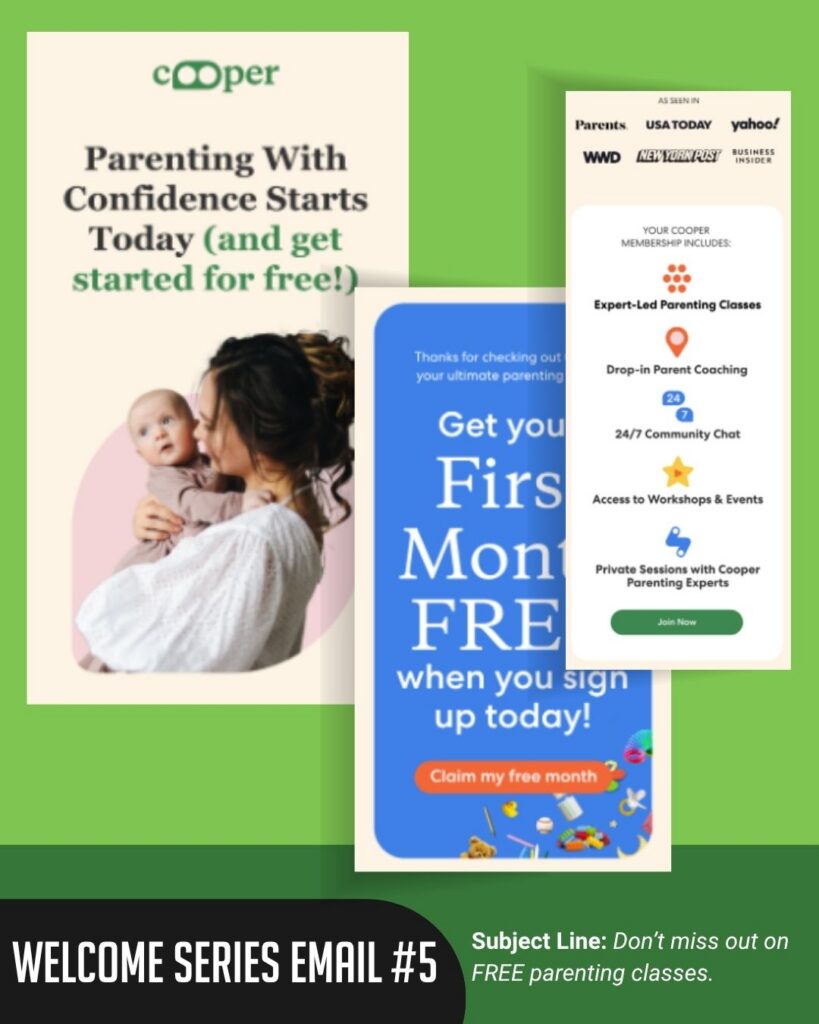
Welcome or onboarding email marketing campaigns are automated sequences sent to new subscribers or customers. They introduce the brand, set expectations, and guide early actions. These campaigns typically last over several days or weeks.
Strong welcome series campaigns often include:
- Brand introduction and value proposition
- Product or service overview
- First purchase incentive or next-step guidance
For example, a brand may send a 3-5 email sequence that introduces the brand story, showcases customer testimonials, and promotes a free resource for first-time customers.
Lead Nurture/Drip Campaign
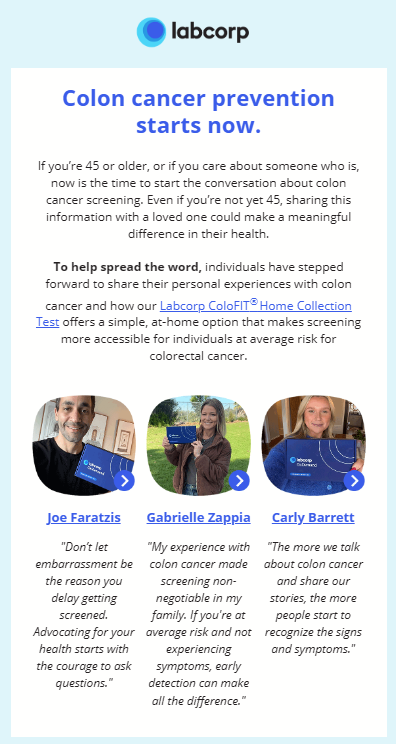
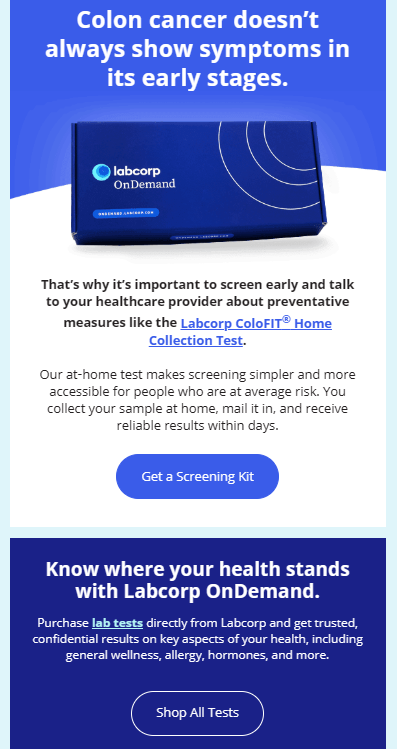
Lead nurture or drip marketing campaigns are automated sequences to move prospects from interest to conversion over time. These campaigns deliver educational or persuasive content based on user behavior or funnel stage.
Common formats for lead campaigns include:
- Educational email sequences for B2B leads
- Product education for complex purchases
- Content series tied to downloads or sign-ups
A typical lead nurture campaign, like the example below, explains key features, shares case studies/testimonials, and invites users to try the product themselves.
Abandoned Cart
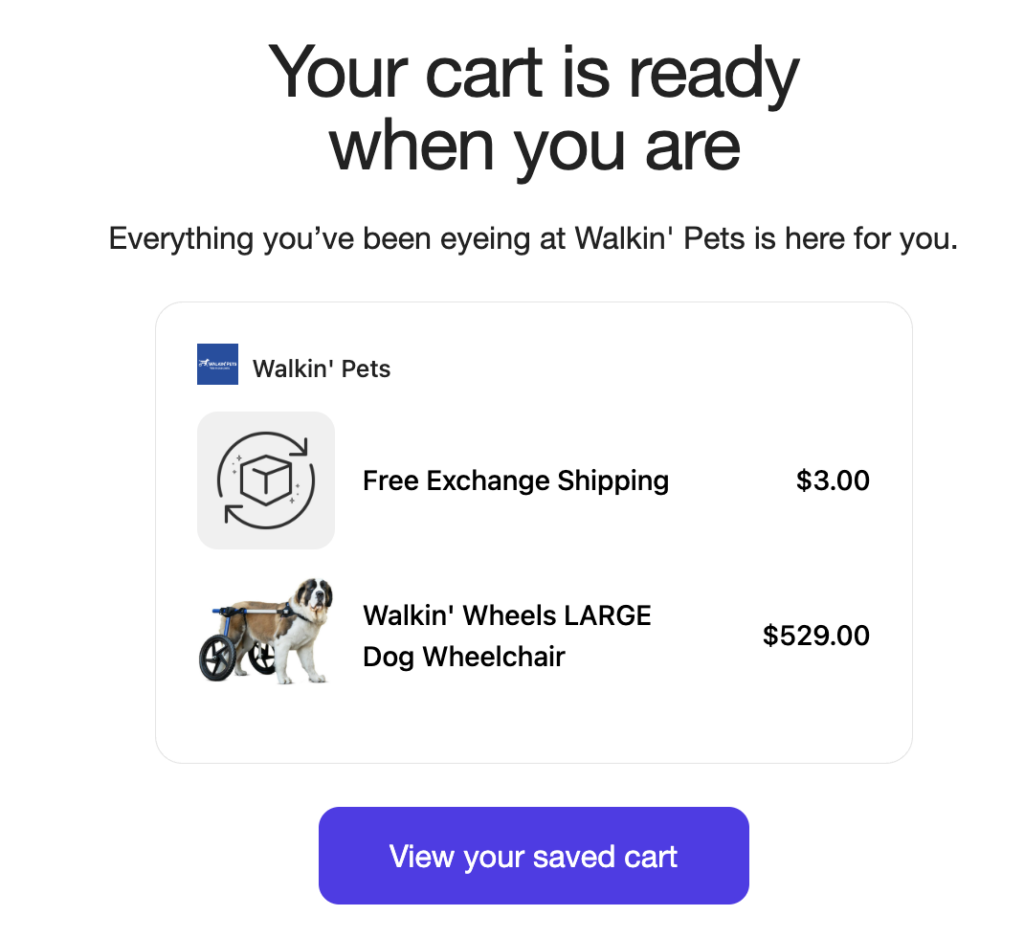
Abandoned cart email campaigns are automated emails that companies send to users who add products to a shopping cart but don’t complete checkout. They focus on recovering lost revenue by reminding users and reducing friction.
Great abandoned cart campaigns often prioritize:
- Product reminders with images
- Urgency (limited stock or time-based incentives)
- Incentives such as discounts or free shipping
Consider an eCommerce store that sends a sequence at one hour, 24 hours, and 72 hours after cart abandonment.
Automated Post-Purchase/Transactional
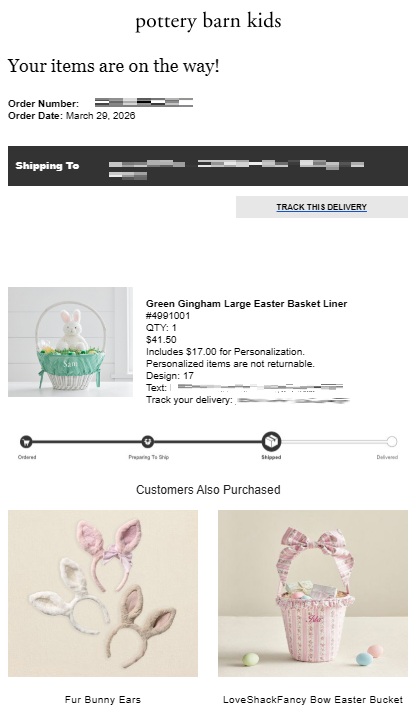
Post-purchase or transactional email campaigns are automated emails triggered after a customer completes a transaction. These emails support the customer experience, along with retention and repeat purchases.
Common examples include:
- Order confirmations and shipping updates
- Product usage tips or onboarding
- Cross-sell or upsell recommendations
Brands often send follow-up emails that recommend related products based on a recent purchase.
Product or Feature Announcement
Product or feature announcement email marketing campaigns introduce new products, updates, or releases to an existing audience. These campaigns often drive awareness, adoption, or early sales.
These campaigns can also support broader visibility. Product announcements contribute to a larger digital PR strategy by amplifying launches across owned and earned channels.
Product or feature updates can make a big impact, but they don’t necessarily need to be groundbreaking. Consider how this brand used email marketing to promote three new product colors.
Re-engagement
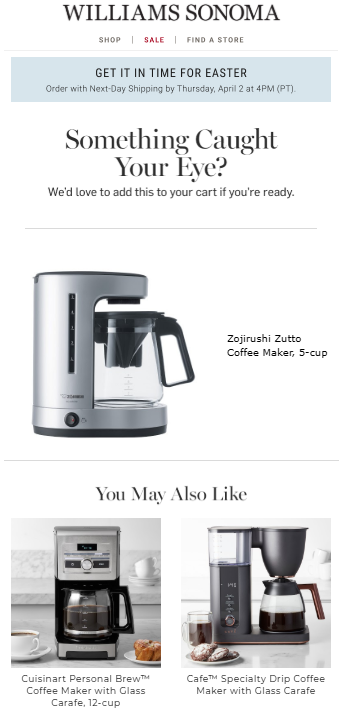
Re-engagement email campaigns target inactive subscribers who haven’t opened or clicked emails within a defined time period. These campaigns aim to win back attention or remove disengaged users.
Common approaches for these efforts include:
- Incentives to return (discounts or exclusive offers)
- Preference updates or survey requests
- “We miss you” messaging with clear next steps
This type of email marketing campaign is also used on prospective customers who still haven’t taken your desired action. In this case, William Sonoma is re-engaging a shoppers who looked at specific products but didn’t complete a purchase.
Outreach
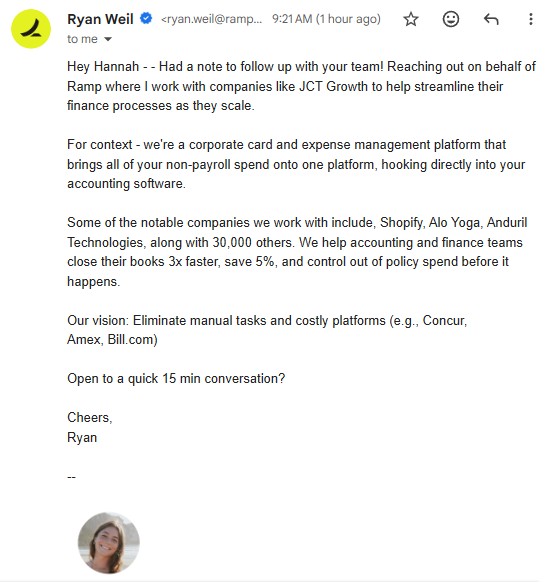
Outreach email marketing efforts are targeted, one-to-one or small-batch emails sent to specific individuals to build relationships, secure partnerships, or generate leads. Businesses often use outreach campaigns for sales prospecting. It also helps in link building, digital PR, or partnership development.
Outreach campaigns differ from traditional campaigns because they prioritize personalization over scale. They often reference the recipient’s company, role, or recent activity to juice response rates.
Common use cases include:
- Sales outreach: Contacting potential customers with a tailored offer or introduction
- Digital PR and link building: Pitching content, data, or collaborations to publishers
- Partnership development: Reaching out to brands or creators for co-marketing opportunities
Outreach campaigns work best with concise, relevant messages. They clearly tie back to the recipient’s interests or goals. Generic outreach emails usually perform poorly because they lack specificity or context.
Other Types of Email Campaigns
Some email marketing campaigns don’t fit neatly into a single category but still support specific use cases.
- Event emails: Invitations, reminders, and follow-ups for webinars or in-person events
- Survey and feedback emails: Requests for reviews or customer input
- Referral campaigns: Emails encouraging customers to refer others
- Milestone emails: Birthdays, anniversaries, or loyalty rewards
These campaign types often support broader strategies focused on engagement, retention, or customer experience.
Comparing Different Types of Email Campaigns
| Type of Campaign | Ideal Use Case | Automation | Single or Series | Format | Audience | Primary Goal |
|---|---|---|---|---|---|---|
| Newsletter/Broadcast | Ongoing engagement, updates | No (scheduled) | Single | Designed or Text | Full list or segment | Relationship building |
| Seasonal/Promotional | Sales events, limited-time-offers | No (scheduled) | Single or short series | Designed | Active subscribers | Conversion |
| Welcome/Onboarding | New subscriber or customer intro | Yes | Multi-email series | Designed or Text | New subscribers | Activation |
| Lead Nurture/Drip | Educating and converting leads | Yes | Multi-email series | Text or Mixed | Prospects | Conversions |
| Abandoned Cart | Recover lost purchases | Yes | Short series (2-4 emails) | Designed | Shoppers who abandoned their cart | Revenue recovery |
| Post-Purchase/Transactional | Customer experience and upsell | Yes | Triggered or series | Mixed | Customers | Retention |
| Product/Feature Announcement | Launch awareness and adoption | Can either be automated or manual | Single or short series | Designed | Subscribers or users | Awareness and adoption |
| Re-engagement | Win back inactive users | Yes | Short series | Mixed | Mix of prospects and inactive customers | Activation |
| Outreach | Engage cold prospects/sales tool | Can either be automated or manual | Single or short series | Text | Prospects | Relationship building and conversion |
The Surprising Value of Text-Based Email Campaigns
Text-based email marketing often performs as well or better than designed emails. Text-based formats feel more personal, load faster, and avoid heavy promotional styling. Many businesses use text-based emails to increase engagement.
Text-based emails work well because they resemble one-to-one communication instead of mass marketing. This format reduces friction for the reader and can improve reply rates. That’s critical in B2B or service-based businesses.
Common advantages of text-based email campaigns include:
- Higher engagement: Simpler formats can lead to more replies and clicks
- Better deliverability: Fewer images and links reduce the risk of spam filtering
- Faster production: Teams can create and send campaigns without design resources
- Stronger personalization: Messages can reference specific behaviors or interests
Consider a founder who sends a plain-text email sharing insights or updates. These often generate more replies than heavily branded newsletters.
Text-based email campaigns don’t replace design emails. Marketing teams should use both formats based on the campaign goal, audience expectations, and message complexity.
List Growth and Data Quality: How to Build an Audience You Can Actually Reach
Email marketing campaigns perform best when businesses build permission-based lists with accurate, well-organized data. High-quality email lists improve things like deliverability and engagement. Low-quality ones increase spam complaints and unsubscribes, essentially making them wasted sends.
First-Party Data and Lists
Businesses should collect first-party data through clear opt-in methods instead of buying email lists. Purchased lists often include outdated or unverified contacts, which can damage the sender’s reputation and reduce inbox placement.
Common sources of high-quality subscribers include:
- Website forms: Newsletter sign-ups, pop-ups, and gated content
- Checkout flows: Opt-in during ecommerce purchases
- Events and webinars: Registrations and follow-ups
- CRM interactions: Contacts from demos or consultations
Incentives
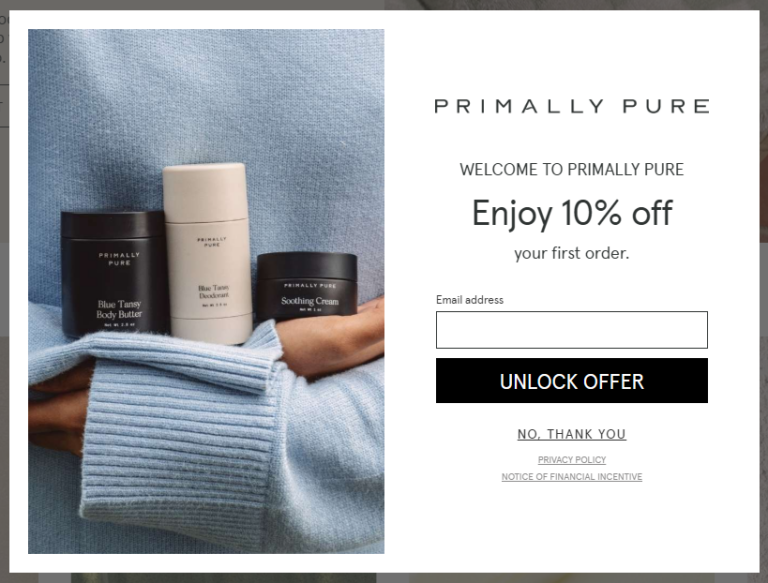
Incentives can support list growth when aligned with user intent. Examples include first-time discounts, exclusive content, or early access to products. Poorly aligned incentives can attract low-quality subscribers who do not engage.
Segmentation and Tagging
Data quality depends on segmentation and tagging. Segmentation helps marketing teams send relevant messages based on behavior, lifecycle stage, or preferences.
Common segmentation methods include:
- Behavioral data: Browsing activity, purchases, or email engagement
- Lifecycle stage: New subscriber, customer, repeat buyer, inactive user
- Preferences: Product interests or content topics
Email marketing campaigns improve over time when businesses maintain list quality through regular cleaning, suppression of inactive users, and consistent tagging.
Making Sure Your Campaigns Land in Inboxes: Deliverability and Compliance Essentials
Emails only generate results if they reach inboxes instead of spam folders. Deliverability depends on permission-based sending, list quality, engagement signals, and compliance. Businesses that ignore these factors do so at their own peril.
Permission and list hygiene are critical. Email providers track how recipients interact with emails. High bounce rates or spam complaints reduce a sender’s reputation.
To make sure your emails reach inboxes:
- Use confirmed opt-in: Only send emails to users who clearly subscribed
- Maintain list hygiene: Remove invalid, inactive, or unengaged contacts
- Limit spam signals: Avoid excessive links, misleading subject lines, or aggressive language
- Monitor engagement: Focus on clicks and conversions, not just sends
Compliance ensures that email marketing campaigns follow legal requirements across regions. While regulations vary, most frameworks share common principles.
| Key Compliance Requirement | What It Means |
|---|---|
| Clear Identification | Emails must state the sender and business name |
| Unsubscribe Option | Every email must include a visible opt-out link |
| Physical Address | Businesses must include a valid mailing address |
| Consent Tracking | Maintain records of how and when users opted in |
Major regulations include CAN-SPAM (U.S.), GDPR (EU), and CASL (Canada). Each regulation defines rules for consent, data use, and communication practices.
Businesses that combine strong deliverability practices with basic compliance standards improve inbox placement and reduce long-term risk.
Measuring Email Marketing Campaign Performance
Marketing analytics are vital to email success. Measure email campaigns with metrics that connect directly to business outcomes. This table maps core email KPIs to what they measure and how they impact revenue, retention, and growth.
| KPI | What it Measures | Business Relationship |
|---|---|---|
| Click Rate | Percentage of recipients who click a link | Indicates message relevance and engagement quality |
| Conversion Rate | Percentage of recipients who complete a desired action | Direct impact on revenue or lead generation |
| Revenue Per Recipient | Average revenue generated per email sent | Connects campaign performance to financial outcomes |
| Unsubscribe Rate | Percentage of recipients who opt out | Signals audience fatigue or misaligned messaging |
| Bounce Rate | Percentage of emails not delivered | Reflects list quality and deliverability health |
| List Growth Rate | Net increase in subscribers over time | Measures the business’s ability to expand its owned audience |
| Re-engagement Rate | Percentage of inactive users who return | Indicates the effectiveness of win-back campaigns |
| Spam Complaint Rate | Percentage of users marking emails as spam | Impacts sender reputation and inbox placement |
Testing, Templates, and Automation to Scale Your Email Marketing Campaign Strategy
Email marketing campaigns scale when businesses test variables and use repeatable templates. Automating high-impact workflows also helps. These practices reduce production time and improve performance through continuous iteration.
A simple A/B testing plan focuses on one variable at a time:
- Subject lines: Test length, tone, and urgency
- Offers: Compare discounts, bundles, or value-based messaging
- Layout: Evaluate text-based versus designed emails
- Calls to action: Test wording, placement, and frequency
- Send times: Identify when audiences are most active
Testing should follow a consistent process: Define a hypothesis, test one variable, measure results, and apply learnings to future campaigns.
Automation helps businesses run campaigns without manual effort. High-impact automated campaigns include:
- Welcome series
- Abandoned cart emails
- Post-purchase follow-ups
- Re-engagement flows
Automation ensures that emails are sent at the right time based on user behavior, which improves relevance and performance.
Businesses that combine testing and templates with automation can scale email marketing campaigns without increasing workload.
Quick Decision Guide: Choose Your Next Email Campaign in 5 Minutes
Businesses can choose the right email marketing campaign by matching a clear goal to a campaign type, cadence, and primary KPI. This simple framework helps teams move from planning to execution without overcomplicating strategy.
| Business Goal | Recommended Campaign | Cadence | Primary KPI |
|---|---|---|---|
| Lead generation | Welcome series, lead nurture | Ongoing | Conversion rate |
| Conversion | Promotional, abandoned cart | Weekly or triggered | Revenue per recipient |
| Retention | Post-purchase, newsletter | Ongoing | Repeat purchase rate |
| Reactivation | Re-engagement campaigns | Monthly or triggered | Re-engagement rate |
A simple starter setup for SMBs includes:
- Welcome series for new subscribers
- Abandoned cart campaign for eCommerce
- Post-purchase follow-up for retention
- Monthly newsletter for ongoing engagement
A basic 30-day execution plan may look like:
- Set up a welcome series and capture forms
- Launch a promotional or newsletter campaign
- Implement an abandoned cart or lead nurture flow
- Review performance and adjust messaging or timing
This approach helps businesses launch quickly while building a foundation for long-term growth.
Get Started Today!
If you’re ready to launch an email marketing program or simply need some experts on your side to turn your sends into real revenue drivers, we’re here to help.
FAQ's
Simple email list growth strategies include using website sign-up forms, offering incentives like discounts or content, and collecting emails during checkout or events. Businesses should focus on permission-based methods to ensure higher engagement and better deliverability.
Email segmentation and tagging improve performance by allowing businesses to send relevant messages to specific audiences. Segmentation based on behavior, lifecycle stage, or preferences increases engagement and reduces unsubscribes.
A broadcast email campaign is a one-time email sent to a group at a scheduled time. A drip campaign is an automated series triggered by user behavior or timing. Drip campaigns deliver messages over time, while broadcasts deliver a single message.
Email frequency depends on your specific audience and desired campaign type. Many businesses send newsletters weekly or monthly, while automated campaigns send based on user actions. Monitoring engagement helps determine the right frequency.
Small businesses benefit from email marketing campaigns because email provides a low-cost way to reach customers directly. Even simple campaigns like welcome emails and newsletters can drive consistent engagement and sales.