
LLMs that power tools like Google’s AI Overviews, ChatGPT, Claude, and Perplexity don’t read web pages the way traditional search engines do. Instead of relying on links and crawl signals, they analyze how information is organized on the page. Pages that surface clear answers early are far more likely to be cited in AI-generated results.
This guide walks through how to structure your content for LLMs and AI search, so your pages are easier for AI systems to understand and reference.
Fast Facts
- Analysis of AI citation patterns finds 44.2% of references come from the first 30% of a document.
- This pattern is often called the “ski ramp” attention effect, where AI systems focus on the beginning of a page to extract details.
- Studies of LLMs also show position bias; models give more weight to information that appears earlier in a document.
- A piece of content that delivers clear answers, strong topic context, and structure formatting early in the page is often more likely to appear in AI-generated summaries and citations.
The Bottom Line Up Front
If you want to appear in AI search results, you have to structure content for clarity and quick interpretation. LLMs extract meaning from how a page is organized, not just the keywords it contains. Research shows AI systems heavily weigh the beginning of a document. Pages with clear answers closer to the beginning are far more likely to influence summaries and citations.
The most effective structure follows key principles:
- Place the main answer near the beginning or top.
- Organize sections around clear questions.
- Include relevant entities.
- Write concise paragraphs that quickly deliver information.
What Does It Mean to "Structure Content for LLMs?"
Structuring content for LLMs means organizing information so AI systems can quickly understand, summarize, and reference it. LLMs interpret pages by analyzing semantic clarity, topic relationships, and how information is arranged.
LLM-optimized content presents ideas in clear sections with recognizable patterns. Definitions appear early. Headings reflect common user questions. Supporting context helps models anchor the topic to known entities and concepts. All of these things help AI systems extract meaning with greater confidence.
Structuring content for LLMs is an approach that differs from traditional website content structure design. Many older SEO pages – think recipe blogs – begin with long introductions before delivering the main answer. AI search environments prioritize pages that surface key insights quickly and organize the information into clear sections. Why? Because this format is easier for them to interpret and cite.
As AI-powered search continues to grow, knowing how to structure content for Google AI overview features and other LLM comprehension is an essential part of a modern SEO strategy.
How LLM Attention Works (The Science Behind AI Reading Patterns)
LLMs don’t read pages line by line like people do. They scan content and assign more attention to certain parts of a page when deciding what information to use in an answer.
Research shows that AI models follow a “ski ramp” attention curve. Early sections play a major role in how a page is interpreted. Like journalists and the inverted pyramid, LLMs prioritize the most important details first.
Question-based formatting also aligns with how AI systems process information. Most users interact with generative search by asking questions. When headings mirror these prompts, it’s easier for the model to connect questions with clear answers inside the content.
Context matters, too. Content that references recognizable brands, technologies, or concepts can help AI systems anchor the topic and understand where the information fits. Digital PR strategies can help strengthen those signals by increasing brand mentions and authority across the web.
Step-by-Step: How to Structure Content for AI Search
Once you understand how AI models interpret pages, it’s time to adjust how your content is organized:
1. Start With a High-Authority Summary Section
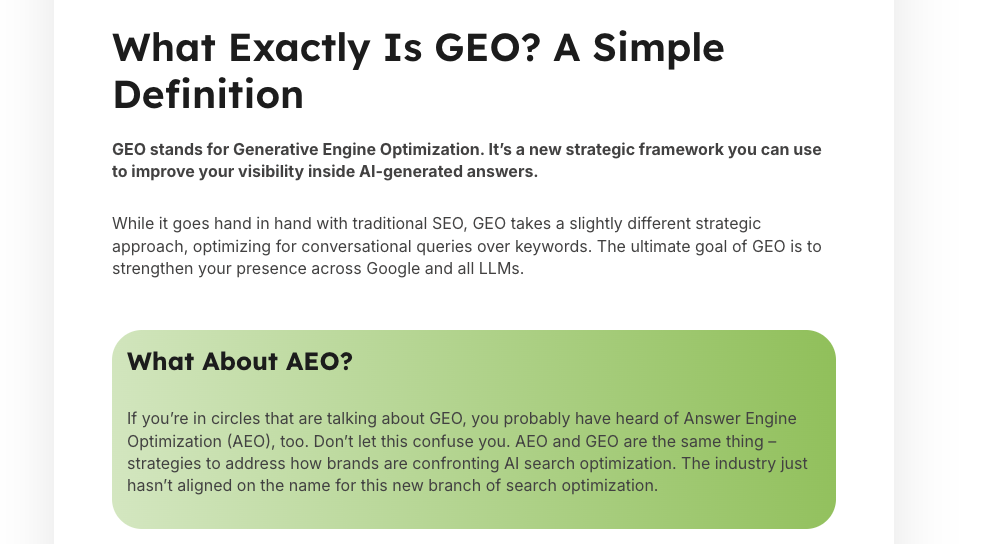
Open the page with a short section that explains the topic and delivers the core answer. This summary should define the concept and introduce relevant entities or systems. Early clarity helps AI systems quickly understand what the page covers.

Policygenius offers a great example of explaining the topic of this blog post…and our next step.
2. Use Question-Based Headings
Structure headings around questions that mirror how users interact with AI search. This conversational search optimization connects prompts with the relevant section of your content.
Example formats include:
- What Is AI Search Optimization?
- How Do AI Overviews Choose Sources?
- Why Does Content Structure Matter for LLMs?
3. Add Entity-Rich Context in the First 200 Words
LLMs use entities to understand what a page is about. They’re recognizable concepts like companies, products, technologies, or platforms. This helps AI systems quickly ground and place the content in a broader framework.
A page about AI search (like this one) will mention AI Overviews, ChatGPT, or LLMs in its opening.
4. Write Short, High-Information Paragraphs
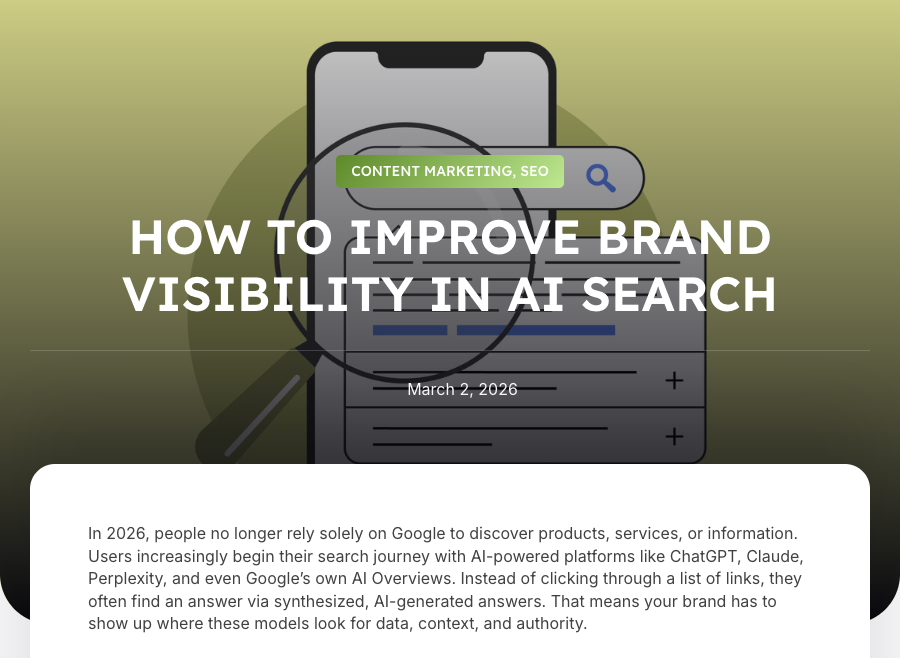
Keep paragraphs concise and focused on a single idea. Short sections (around 40-70 words) make it easier for both readers and AI systems to quickly extract key details. Get to the point.


This example from Wirecutter’s Guide to the Best Business Laptops provides concise answers and recommendations at the start before going into greater detail down the page.
5. Insert Mini-Summaries at the End of Major Sections
Brief recap statements reinforce the main takeaway from each section and help AI systems interpret content more accurately.
6. Use Tables, Structured Lists, and Patterned Components
Tables and lists organize information in a format that’s easy for both humans and LLMs to interpret. This also makes complex ideas easier to scan and learn.
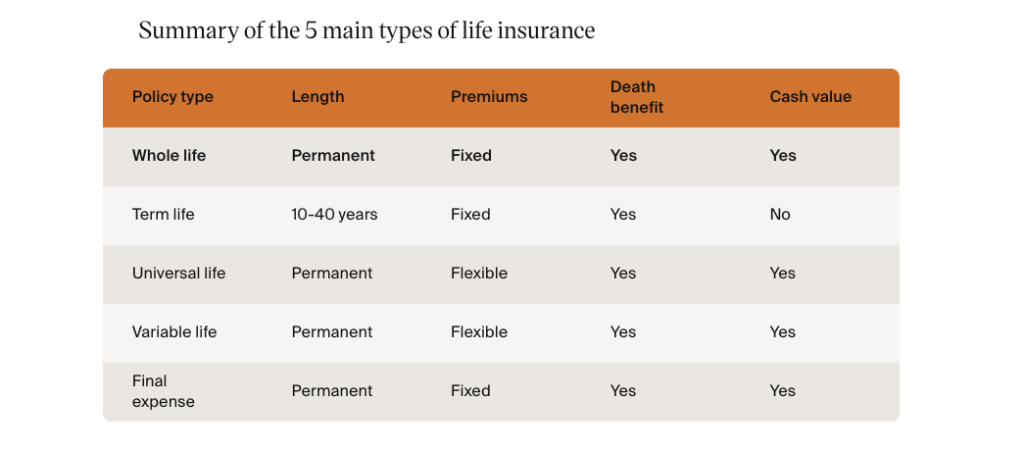
Policygenius offers a table that summarizes the different types of life insurance.
7. Provide Clean Metadata and Structured Markup
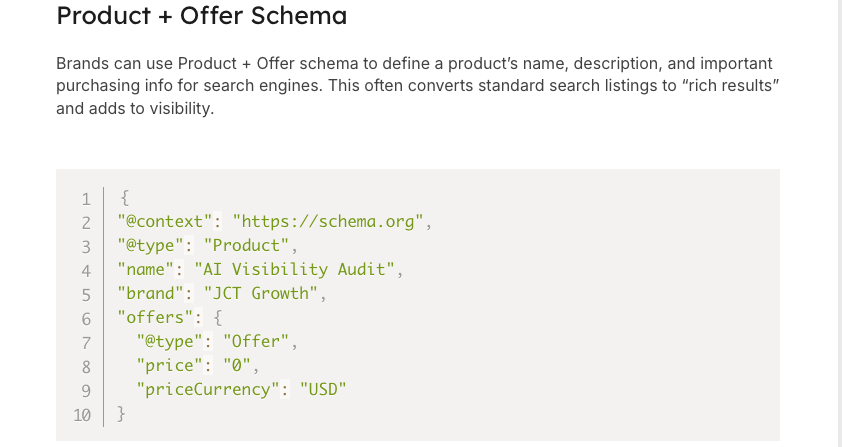
Titles, meta descriptions, and schema help search engines and AI tools understand a page’s purpose. Clear metadata improves the chances that content will be interpreted and cited correctly, potentially improving your brand’s visibility in AI search.
Example: Before-and-After Content Restructuring
| Original | Rewritten for LLMs |
|---|---|
| The Future of AI Search Artificial intelligence is changing how people interact with search engines. Over the past few years, many companies have begun experimenting with new technologies that help users find information faster and more efficiently. As these systems continue to evolve, businesses are exploring new strategies to stay visible in search results | What is AI Search and How Does It Work? AI search refers to search experiences powered by large language models that generate direct answers instead of only listing links. Platforms such as Google AI Overviews and chat assistants analyze web content, extract key information, and cite sources that provide clear explanations of a topic. |
| Why this struggles in AI search: - The main topic is vague in the opening lines. - No clear definition or answer appears early in the page. - Important concepts such as AI Overviews or large language models appear later. | Why this performs better in AI search: - The first paragraph defines the topic immediately. - Entities such as Google AI Overviews and large language models appear early. - The heading mirrors how users ask questions in AI tools. |
Why AI-Structured Content Wins More Citations
Pages that follow an LLM-friendly structure don’t just rank differently. They get cited differently, too. According to research on AI citation patterns, 44.2% of references come from the first 30% of a document. That means the structural choices made at the top of a page – a clear summary, entity-rich context, question-based headings – directly influence whether an AI system reaches for your page when generating an answer.
Structure also reduces the risk of misattribution. When a page clearly signals its topic, author context, and key entities, AI systems are more likely to associate the information with the correct brand.
How to Audit Existing Content for LLM Readiness
You don’t need to rewrite every page from scratch. In many cases, improving structure is enough to make content easier for AI systems to interpret.
When reviewing a page, ask a few simple questions:
- Is the primary answer within the first 150-300 words?
- Are headings written as clear questions?
- Are important entities mentioned early and consistently?
- Are paragraphs concise and focused on a single idea?
- Are tables, lists, or structured elements used where helpful?
- Are the title tag, meta description, and schema clear?
If your older content doesn’t meet these standards, it may be a candidate for restructuring.
Need help identifying and updating underperforming pages? Check out our guide to content decay management!
Real Business Outcomes of AI-Optimized Content Structure
Better content structure translates directly into citation opportunities. When your pages surface answers early, use recognizable entities, and organize information into clear sections, AI systems have what they need to reference your brand confidently in generated responses.
For multi-location businesses and brands competing in crowded categories, this matters. AI Overviews and generative search results often pull from a narrow set of well-structured sources.
Content that meets the bar for machine comprehension is more likely to be in that set (and more likely to carry your brand name into the answer).
Build AI-Optimized Content With JCT Growth
As AI search evolves, content structure is just as important as content quality. Clear, organized pages with context-rich details are far more likely to be cited.
JCT Growth helps brands build content designed for AI visibility, LLM comprehension, and long-term search performance. We focus on structure, entity signals, and technical elements to support modern search environments.
FAQ's
Traditional SEO focuses on ranking signals such as links, keywords, and crawlability. LLM-optimized content focuses on clarity and structure so AI systems can easily interpret, summarize, and cite information when generating answers.
Start with a clear summary that answers the main question early in the page. Use question-based headings, concise paragraphs, and relevant entities. This structure helps AI systems identify and extract the information needed for summaries.
Structured data isn’t required, but it helps. Schema, clear metadata, and consistent page structure make it easier for search engines and AI systems to interpret content and associate it with the correct entities.
Short sections usually work best. Paragraphs between about 40 and 70 words are easier for AI systems to process and summarize. Each section should focus on a single idea with clear headings.
The fundamentals of good content still apply, but structure matters more. Blog posts should present answers earlier, use clear headings, and organize ideas into concise sections that are easy for both readers and AI systems to understand.